Nyungwe Forest is one of Africa’s oldest and richest rainforests. It lies in southwest Rwanda, near the Burundi and DRC borders. Mist drifts over green ridges. Streams run through ferns. In short, it feels truly wild.
This guide explains why Nyungwe Forest deserves a place on your itinerary. You will learn about chimpanzees, the canopy walk, primates, birds and hiking trails. You will also find costs, timing and practical tips.
At Wildroots Africa Safaris, we often add Nyungwe to Rwanda circuits. Below, we share what makes it special.
About Nyungwe Forest
Nyungwe is a vast montane rainforest. It covers over 1,000 square kilometres. UNESCO added it to the World Heritage List in 2023. You can read more on the UNESCO World Heritage Centre website.
The forest shelters rich biodiversity.
- About 13 primate species
- Around 75 mammal species
- More than 300 bird species
- Hundreds of tree and orchid species
Moreover, it feeds rivers that flow to both the Nile and Congo basins. As a result, it plays a key role in Rwanda’s water supply.
A Note on Current Travel Conditions
Governments changed travel advice across the region during 2026 because of an Ebola outbreak in Central Africa. Check your government’s advice before travelling. Also read our Is Uganda safe for tourists? guide for health context, and check current Rwanda entry rules.
Getting to Nyungwe
Nyungwe lies about five to six hours from Kigali by road. The route winds through tea plantations and hills. Therefore, plan an overnight stay.
You can also reach the forest from Lake Kivu. The drive from Rusizi or Karongi takes about two to three hours. This makes Nyungwe a good stop between Kivu and Kigali. Alternatively, travel from Bwindi through Rusizi, though border times vary.
Chimpanzee Trekking in Nyungwe
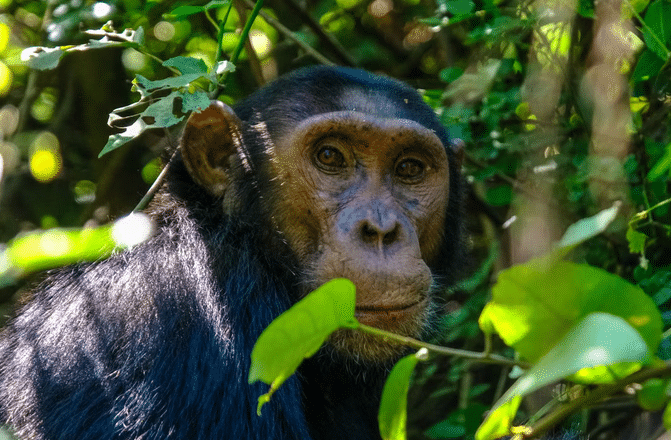
Chimpanzee trekking is the headline activity. Nyungwe has a community of habituated chimps. Trackers search before dawn, and trekking groups set out early.
How It Works
- Early start: You wake before sunrise.
- Briefing: Rangers explain the rules.
- Trek: You walk through forest on steep trails.
- Time with chimps: You spend about one hour with them.
- Return: You walk back to the trailhead.
Treks can take two to six hours. The terrain is steep and often muddy. Therefore, fitness matters. Rangers adjust group pace as best they can.
Permit Costs
Permit prices vary and change. Recent reports suggest figures between $100 and $150 for foreign non-residents. Confirm the current price with the Rwanda Development Board.
Chimps can be hard to find in dense forest. Nevertheless, sightings are common. For a comparison with Uganda’s chimps, read our guide to chimpanzee trekking in Kibale Forest.
The Canopy Walk
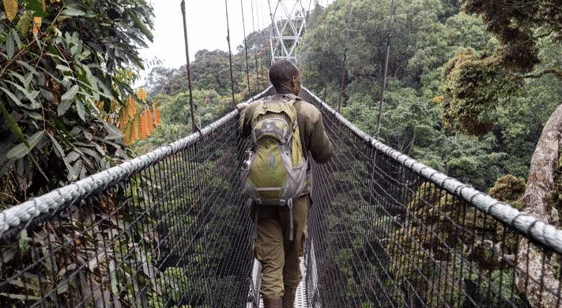
The canopy walk is the star attraction for many visitors. It is a suspended bridge about 160 metres long. It hangs roughly 50 to 70 metres above the forest floor. The views are spectacular.
- Duration: About 30 to 45 minutes
- Difficulty: Easy, though not for those afraid of heights
- Group size: Small, with a guide
- Best time: Morning, when birds are active
The walk starts with a short forest hike. Then you step onto the metal walkway. You look down onto treetops and across misty valleys. In addition, you may spot monkeys and birds at eye level.
Prices are reported around $60 to $70 per person, but confirm before booking.
Colobus Monkey Tracking
Nyungwe is famous for its large troops of Angolan colobus monkeys. Some groups contain hundreds of animals. Therefore, the spectacle is impressive.
Tracking takes place near the Gisakura area. You walk with a guide and watch the monkeys leap between trees. The trek is easier than chimp tracking.
Other Primates
Nyungwe also shelters other species.
- L’Hoest’s monkeys
- Blue monkeys
- Grey-cheeked mangabeys
- Silver monkeys
- Mona monkeys
- Owl-faced monkeys
Guides know where each species tends to feed. As a result, you often see several in one day.
Birdwatching
Nyungwe is a top birding site. More than 300 species have been recorded, and many are Albertine Rift endemics.
- Rwenzori turaco
- Handsome francolin
- Red-collared babbler
- Grauer’s warbler
- Many sunbirds and flycatchers
Early morning is best. A guide helps identify calls. Bring binoculars. For global birding information, visit BirdLife International.
Hiking Trails
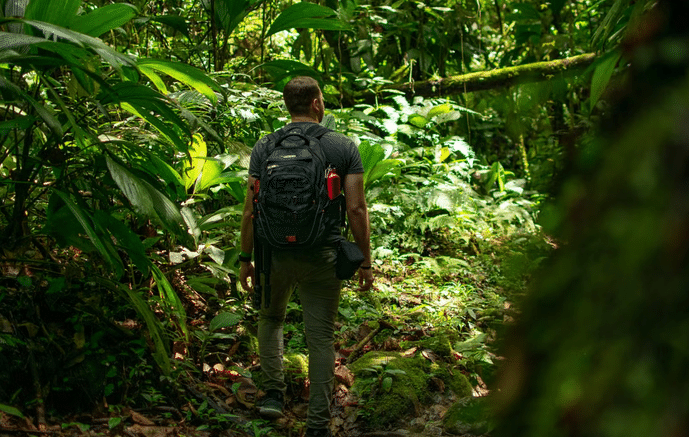
Nyungwe has a network of trails. They range from short walks to full-day hikes.
Short Walks
- Igishigishigi Trail: Leads to the canopy walk
- Isumo Waterfall Trail: A moderate walk to a pretty waterfall
Long Hikes
- Bigugu Trail: A challenging hike to the highest point
- Imbaraga Trail: Longer, with more forest immersion
Trails can be steep and slippery. Therefore, wear sturdy boots and carry rain gear. Rangers guide most walks.
Tea Plantation Visits
Tea estates edge the forest. You can tour a plantation and see how leaves become tea. These visits show local life. In addition, they support communities.
Where to Stay
Lodging near Nyungwe covers all budgets.
- Luxury lodges: Forest-view rooms and spa services
- Mid-range lodges: Comfortable and well located
- Budget guesthouses: Simple and clean
Stay close to your main activity. For example, the Uwinka area suits canopy walks and trails. Gisakura suits colobus tracking. Kitabi is a good chimp-trek base.
Our guide on how to choose the right safari lodge in Uganda lists factors that apply in Rwanda too.
Best Time to Visit Nyungwe
You can visit all year. However, seasons shape the trip.
Dry Seasons
June to September and December to February are easiest. Trails are firmer. Views are clearer.
Wet Seasons
March to May and October to November are wetter. The forest is lush. Crowds are lower. However, trails are muddy and mist may hide views.
Nyungwe has its own cool, damp climate. Therefore, pack rain gear in any month.
What to Pack
Packing well makes treks easier.
- Waterproof hiking boots
- Gaiters
- Rain jacket
- Long sleeves and trousers
- Warm layer
- Gloves
- Insect repellent
- Binoculars and camera
See our full checklist in what to pack for a gorilla trekking adventure. Remember that Rwanda bans plastic bags.
How Many Days Do You Need?
Plan at least two nights. The long drive makes one night too short.
- 2 nights: Canopy walk and chimp trek
- 3 nights: Add colobus tracking and a hike
- 4 nights: Add birding and a tea plantation visit
For help with trip length, read our guide on how many days you need for a Uganda safari. The same principles apply.
Sample Itinerary
Day 1: Drive from Kigali to Nyungwe. Visit a tea estate.
Day 2: Early chimp trek. Rest in the afternoon.
Day 3: Canopy walk and colobus tracking.
Day 4: Drive to Lake Kivu or back to Kigali.
Conservation and Community
Nyungwe faces threats such as poaching and habitat loss. However, strong protection has helped. Park fees fund rangers and community projects. Local people benefit through jobs and revenue sharing.
You can support conservation by following rules and choosing responsible operators. Also buy local crafts when you can.
Safety and Health Tips
- Follow ranger instructions on trails
- Carry water and snacks
- Use insect repellent
- Tell guides about health issues
- Do not trek if you are sick
- Buy travel insurance
For vaccines, see the CDC travel health pages. Tourism details are on Visit Rwanda.
Final Thoughts on Nyungwe Forest
Nyungwe Forest offers chimps, monkeys, birds and breathtaking views. The canopy walk thrills. The trails reward patience. Moreover, the forest feels peaceful and ancient.
Plan at least two nights, pack for rain and book your treks early.
Ready to explore? Browse our safari packages or contact our team. Our team at Wildroots Africa Safaris will build a trip that includes Nyungwe.