Kibale vs Bwindi: Which Primate Experience Is Right for You?
Uganda is one of East Africa’s most rewarding destinations for travellers interested in primates. Two destinations stand out in particular: Kibale Forest National Park and Bwindi Impenetrable Forest National Park.
Both offer unforgettable forest experiences, but they are very different. Kibale is especially known for chimpanzee trekking and its remarkable diversity of primates, while Bwindi is internationally recognized for mountain gorilla trekking.
So, when comparing Kibale vs Bwindi, which one should you include in your Uganda safari?
The answer depends on what you want to experience. Some travellers are drawn to the excitement of following chimpanzees through the forest, while others dream of encountering a mountain gorilla family in the ancient rainforest. Travellers with enough time can also combine both destinations for a more complete primate safari.
Kibale vs Bwindi at a Glance
Kibale Forest National Park is located in western Uganda and is widely known for its chimpanzee population and exceptional primate diversity.
Bwindi Impenetrable Forest National Park is located in southwestern Uganda and is one of the world’s most important habitats for mountain gorillas.
The main difference is therefore the type of primate experience.
Kibale is primarily associated with chimpanzee trekking and broader primate experiences.
Bwindi is primarily associated with mountain gorilla trekking.
Both destinations offer opportunities to explore rainforest environments, observe wildlife and learn from experienced guides.
Chimpanzee Trekking in Kibale
Kibale is an excellent destination for travellers who want to experience chimpanzees in their natural forest environment.
Chimpanzee trekking involves walking through the forest with trained guides and trackers while searching for chimpanzee communities. Unlike a traditional wildlife game drive, the experience takes place on foot and can involve following the animals through different parts of the forest.
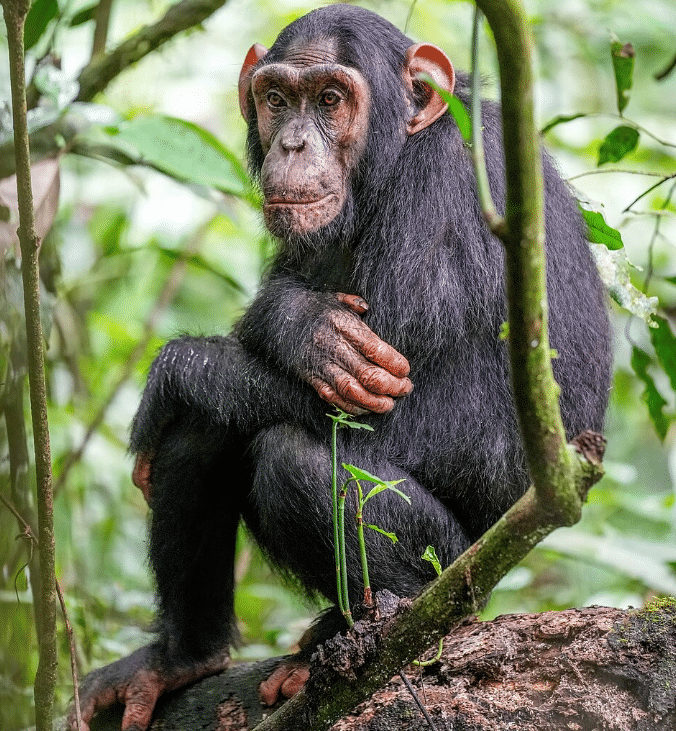
Chimpanzees are active and highly social animals, making their behaviour particularly interesting to observe.
During your trek, you may also encounter other primates and forest species. Kibale is home to a remarkable variety of monkeys, making the forest experience about much more than chimpanzees alone.
For travellers who enjoy wildlife behaviour, forest exploration and primate diversity, Kibale can be an excellent addition to a Uganda safari.
Gorilla Trekking in Bwindi
Bwindi offers a very different experience.
The main attraction is mountain gorilla trekking, which involves entering the forest with guides and trackers to search for a habituated gorilla family.
Mountain gorillas live in the dense forest and move naturally through their habitat. Finding them can therefore involve anything from a relatively manageable walk to a more demanding trek through steep terrain.
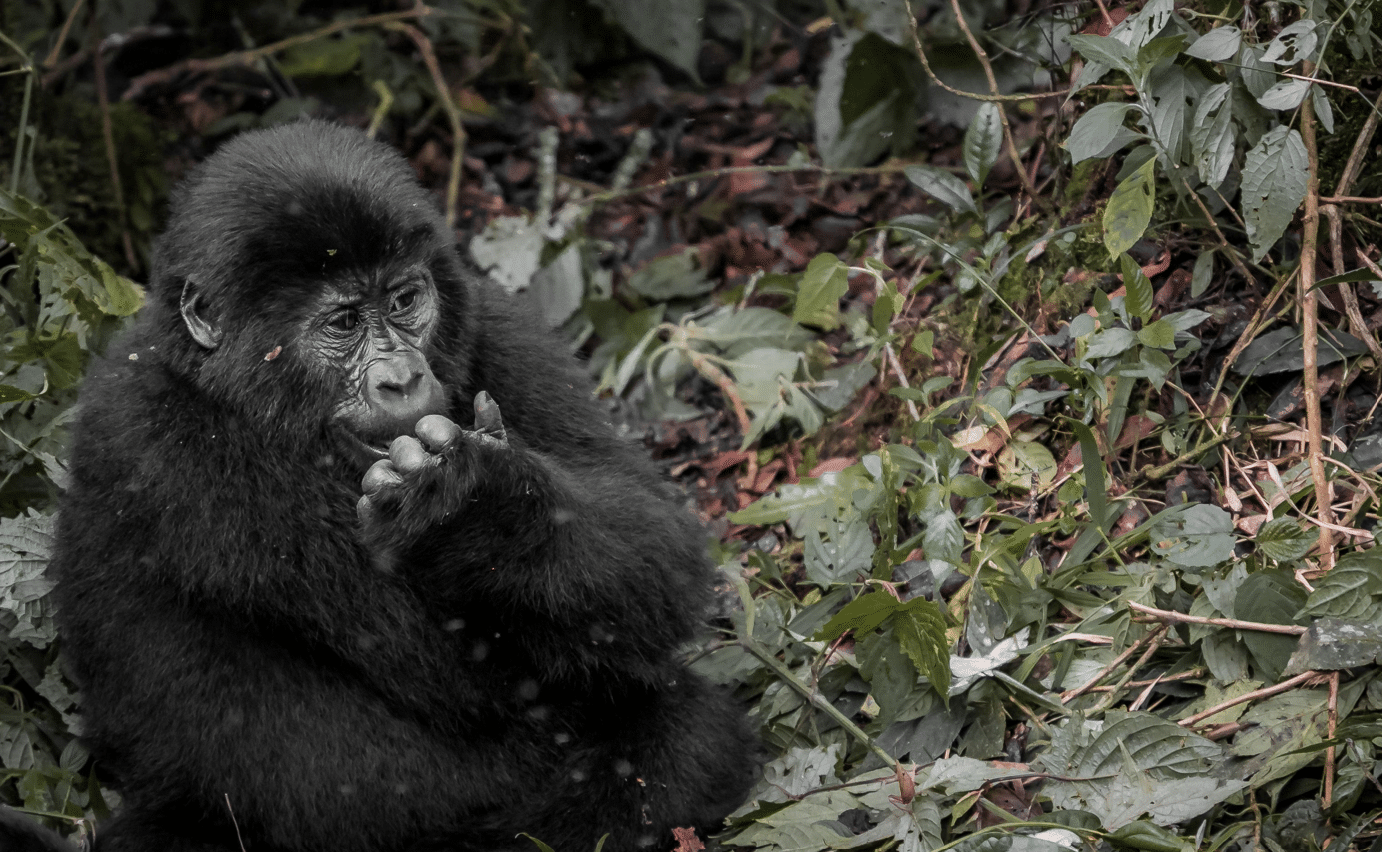
Once the gorilla family is located, visitors have an opportunity to observe these magnificent animals in their natural environment while following the established visitor guidelines.
The experience is often described as deeply memorable because of the close connection visitors can observe between members of the gorilla family.
Which Trek Is More Physically Demanding?
There is no single answer because trekking conditions can vary considerably at both destinations.
Chimpanzee trekking in Kibale generally involves walking through forest terrain, but the duration and difficulty can depend on where the chimpanzees are located and the conditions on the day.
Gorilla trekking in Bwindi can involve steeper terrain and longer walks, depending on the location of the gorilla family assigned to your group.
Weather also plays a role. Rain can make forest trails slippery and more challenging.
Travellers should therefore prepare for walking and bring suitable footwear regardless of which destination they choose.
Your safari operator can provide more specific advice based on the planned trekking location and itinerary.
Kibale for Primate Diversity
One of Kibale’s major attractions is its broader primate diversity.
The forest supports several species of primates, creating opportunities to encounter different monkeys during your visit.
This makes Kibale particularly interesting for travellers who are fascinated by primates as a group rather than focusing on a single species.
A guided forest walk can reveal behaviour and interactions that are easy to miss without an experienced guide.
For photographers and nature enthusiasts, the combination of forest scenery and active primates creates plenty of interesting opportunities.
Bwindi for Mountain Gorillas
Bwindi has a different appeal.
The mountain gorilla is the primary reason most travellers visit the park, and the experience is focused around locating and observing a habituated gorilla family.
The forest itself is also an important part of the experience. Bwindi is a complex rainforest ecosystem with rich biodiversity, birds, plants and other wildlife.
The combination of the ancient forest and mountain gorillas makes the destination particularly special for travellers