Chimpanzee trekking in Kibale Forest is one of Uganda’s most thrilling wildlife experiences. You walk into a lush rainforest and listen for distant calls. Then you meet our closest living relatives face to face. For many travellers, it rivals gorilla trekking in emotion and excitement.
This guide covers everything you need to plan. You will learn about permit costs, the best time to go, what to pack and how to prepare. By the end, you will feel ready to book.
At Wildroots Africa Safaris, we guide guests through Kibale regularly. Below, we share what we know from the trail.
What Makes Kibale Forest Special?
Kibale National Park lies in western Uganda, near the town of Fort Portal. It protects a large tract of tropical rainforest. As a result, it is home to a remarkable range of wildlife.
The park is often called the primate capital of Africa. It shelters about thirteen primate species. These include red colobus monkeys, black-and-white colobus, L’Hoest’s monkeys and grey-cheeked mangabeys. In addition, Kibale holds one of the largest chimpanzee populations in East Africa.
Birdlife is rich too. Over 300 species have been recorded. Butterflies, forest elephants and many tree species add to the variety. You can read more about the park on the Uganda Wildlife Authority website.
Why Choose Chimpanzee Trekking in Kibale Forest?
Many parks offer chimp tracking. However, Kibale stands out for several reasons.
- High success rate: Sightings are very reliable, especially on morning treks.
- Large communities: Several chimp groups live in the forest.
- Easy access: The park is only a short drive from Fort Portal.
- Great scenery: Crater lakes and rolling hills surround the park.
- Rich extras: You can add primate walks, birding and cultural visits.
Therefore, Kibale suits first-time visitors and seasoned wildlife lovers alike.
How Chimpanzee Trekking Works
The process is simple, and rangers guide you every step. Here is how a typical trek unfolds.
- Briefing: You arrive at the visitor centre. Rangers explain the rules and safety tips.
- Group assignment: Small groups are formed. Groups are limited in size to reduce disturbance.
- Trek: Rangers lead you into the forest. Trackers help locate the chimps by sound and signs.
- Time with chimps: Once found, you spend about one hour watching them.
- Return: You walk back to the centre and receive your certificate in some cases.
Treks usually start in the morning and again in the afternoon. Morning sessions often give the best sightings. Chimps are active and feeding then.
The walk itself can last from thirty minutes to several hours. It depends on where the chimps are. Consequently, flexibility and patience matter.
Chimpanzee Trekking Permit Cost
Permits are required for every visitor. The Uganda Wildlife Authority sets the prices. Recent tariff reports show these approximate rates for foreign non-residents:
- Standard chimpanzee tracking permit: about $250
- Low-season chimpanzee permit: reported at about $200
- Chimpanzee habituation experience: about $300
Foreign residents and East African citizens pay lower rates. In addition, children over a minimum age may qualify for different pricing.
Tariffs change from time to time. Therefore, always confirm the current price before you book. Check the official UWA tariff page or ask our team for a quote.
For a wider view of expenses, read our guide on Uganda safari costs.
Chimpanzee Habituation Experience
The habituation experience offers a deeper encounter. It is different from standard trekking. You join researchers and trackers for much longer.
Here is what to expect:
- Longer time: You spend most of the day with the chimps.
- Early start: The day begins before dawn.
- Closer insight: You learn how chimps are taught to accept humans.
- More behaviour: You may see feeding, grooming, play and travel.
This option suits photographers and serious wildlife fans. However, it needs good fitness and patience. Permits are limited, so book early.
Best Time for Chimpanzee Trekking in Kibale Forest
Chimps can be tracked all year. Nevertheless, seasons shape the experience.
Dry Seasons
The dry months run from June to September and December to February. Trails are firmer and easier to walk. As a result, trekking is more comfortable. Visibility is often better too.
Wet Seasons
The wet months are March to May and October to November. Trails are muddy and slippery. However, fruit is plentiful, so chimps often stay close to fruiting trees. In addition, lodge prices are lower. See our guide to the best time to visit Uganda for a safari for a month-by-month breakdown.
Low-Season Discounts
UWA has introduced low-season savings in April, May and November. These apply to some permits. Check current rules before booking, because discounted permits may be non-refundable or non-changeable.
What Will You See in Kibale?
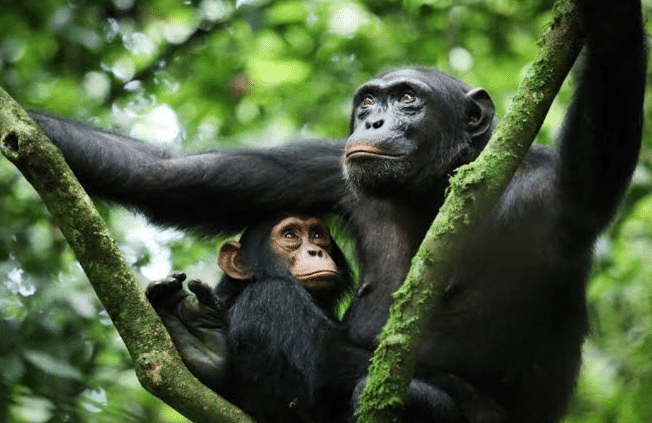
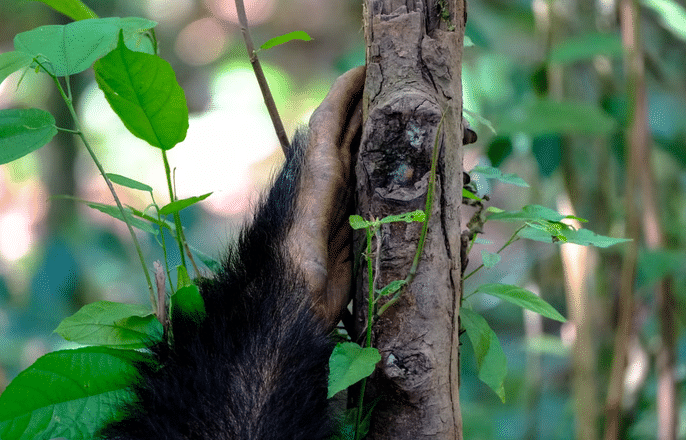
Chimpanzees are the main attraction. You may see them feeding in fig trees, grooming each other or travelling on the ground. Males sometimes display loudly. Mothers carry infants close.
Beyond chimps, you may spot:
- Red colobus monkeys
- Black-and-white colobus monkeys
- L’Hoest’s monkeys
- Grey-cheeked mangabeys
- Blue monkeys and red-tailed monkeys
- Forest birds, including hornbills and turacos
- Butterflies and forest plants
Therefore, a Kibale trek offers far more than chimps alone.
Other Activities Around Kibale
Make the most of your stay with extra activities. Here are the best options.
Bigodi Wetland Sanctuary
This community-run wetland lies next to the park. You walk on raised trails and look for birds and monkeys. It is also a good place to see the great blue turaco. Revenue supports local projects.
Guided Nature Walks
Rangers lead walks through different forest zones. Evening walks can reveal nocturnal creatures. In addition, they offer a peaceful change of pace.
Crater Lakes
The region around Fort Portal has beautiful crater lakes. You can hike, swim in some areas or simply enjoy the view. Photographers love the soft light.
Cultural Visits
Local communities offer craft, farming and music experiences. These visits support families and share local heritage. For official tourism information, visit Visit Uganda.
How Fit Do You Need to Be?
Kibale is easier than many forests. However, you still need basic fitness. The terrain is mostly gentle, with some hills and muddy sections.
Walks may be short or long. Rangers match the group’s pace as best they can. Moreover, you can ask for a slower group if needed.
To prepare, walk regularly before your trip. Wear in your boots too. Hydration and rest help as well.
Rules and Etiquette
Rules protect chimps and visitors. Following them is essential.
- Keep your distance. Stay at least ten metres away from the chimps.
- Stay calm. Do not shout or make sudden moves.
- Do not eat near the chimps. Food can attract attention.
- No flash photography. It can stress the animals.
- Do not trek when sick. Chimps can catch human illnesses.
- Do not litter. Carry out all waste.
- Follow your guide. Rangers know how to read chimp behaviour.
Health matters a great deal. Chimps share most of their DNA with humans. As a result, they are vulnerable to colds and flu. Therefore, stay home if you feel unwell. You can read about primate conservation on the Jane Goodall Institute site.
Age Limits and Group Size
Most primate trekking requires a minimum age. This is usually 15 for gorillas and 12 for chimpanzees. Always confirm current rules with your operator.
Groups are kept small. This protects the chimps and improves your experience. Typically, a handful of visitors go out with one ranger team.
Combining Kibale With Other Uganda Parks
Kibale fits neatly into many itineraries. It sits between several popular parks.
- Queen Elizabeth National Park: about two hours south. Think tree-climbing lions and boat cruises.
- Bwindi Impenetrable National Park: further south. This is the home of gorillas.
- Murchison Falls National Park: north of Kibale. It offers big game and the Nile.
- Semuliki National Park: to the west, with hot springs and unique birds.
A classic route runs from Kampala to Kibale, then to Queen Elizabeth, then to Bwindi. Therefore, you can see chimps, big game and gorillas in one trip. Explore our Uganda safari packages for ready-made routes. If gorillas are on your list, see our Uganda gorilla trekking safaris.
Chimpanzee Trekking vs Gorilla Trekking
Many travellers wonder which is better. Both are wonderful, but they differ.
- Cost: Chimp permits cost far less than gorilla permits.
- Behaviour: Chimps are quick and noisy. Gorillas are calmer and slower.
- Terrain: Kibale’s trails are often easier than Bwindi’s.
- Photography: Chimps move fast and high. Gorillas are often easier to photograph.
- Emotion: Gorillas feel intimate. Chimps feel energetic and playful.
In short, doing both gives the richest experience. For a budget-friendly trip, chimps are a great start.
Other Places to See Chimps in Uganda
Kibale is not the only option. Other sites include:
- Budongo Forest: near Murchison Falls, with a good trekking programme
- Kyambura Gorge: inside Queen Elizabeth National Park
- Toro-Semliki Wildlife Reserve: a quieter option
- Ngamba Island: a sanctuary on Lake Victoria for rescued chimps
Nevertheless, Kibale remains the most popular choice. Its sighting rate and setting are hard to beat.
Tips for a Great Experience
Follow these tips to make the most of your trek.
- Book early. Permits can sell out in peak months.
- Choose morning treks. Chimps are often more active.
- Be patient. Chimps move fast, and you may need to follow them.
- Hire a porter if needed. It helps local families.
- Listen to your ranger. Their advice improves your sightings.
- Carry water. Forest humidity can tire you quickly.
- Get travel insurance. Choose cover for medical care and cancellations.
- Prepare your visa. Apply through the official Uganda e-visa portal.
Final Thoughts on Chimpanzee Trekking in Kibale Forest
Chimpanzee trekking in Kibale Forest is affordable, exciting and unforgettable. You get strong sighting chances, beautiful scenery and a wide range of extra activities. Moreover, your permit fee supports conservation and local communities.
Whether you pair it with gorillas or enjoy it on its own, Kibale delivers. Pack well, follow the rules and enjoy every moment.
Ready to plan your trip? Browse our Uganda safari packages or request a custom quote. Our local team at Wildroots Africa Safaris will build an itinerary around your dates and budget.